Custom Pilates grip socksCustom grip plates from 100 pairsWorldwide buyer support
Home/Blog/Custom Grip Pattern Approval

Private-Label Buyer Guide

How to Approve a Custom Grip Pattern Before Bulk Production

Grip material and sample guide · September 10, 2026

Use the production artwork to approve what can be seen, then use an identified physical sample to approve what must be felt or tested.

Compare four grip plate layouts

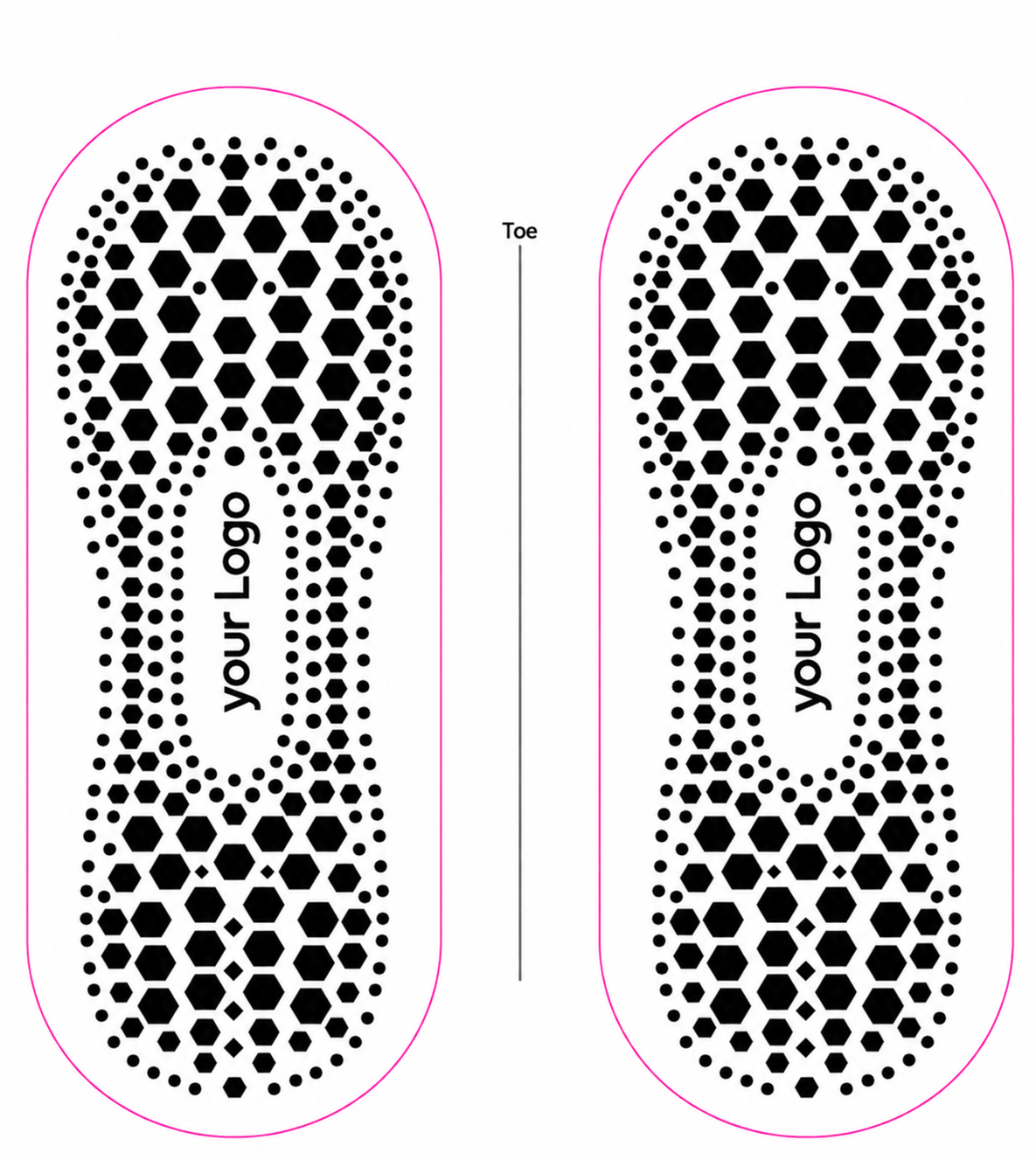
Custom full-sole grip plate layout with mixed-size hexagon and circle motifs and an integrated center logo
Production-artwork reference from UPILATE's processed grip plate library. It shows motif distribution, sole coverage and logo orientation; it is not a friction, adhesion or wash-durability test.
Quick answer

Approve a custom grip sock pattern in two stages: sign off the production artwork, then approve one identified physical sample. Confirm whether the order uses standard rubber or premium silicone, plus the color, motif size and spacing, heel-to-toe coverage, logo position and orientation, left/right layout and any unavoidable edge gaps. Changes after approval may require a revised grip plate, quotation and schedule.

Different grip patterns distribute the selected grip material differently across the sole. A larger icon, smaller repeated motif or mixed geometric field changes contact layout and visual identity, but the drawing alone cannot prove which option will feel more secure in use.

That distinction matters because buyer discussions often connect “more dots” or “more coverage” with better grip. In practice, the grip material, print height, curing, sock fit, movement and contact surface also influence the result.

1 · Separate the evidence

Artwork approves the layout; a sample approves the product.

Keep visible geometry and physical performance in two different approval records.

Artwork can confirm

Pattern, spacing, coverage and brand placement.

The production file should make each visible decision easy to check before a plate is prepared.

  • Motif shape, size and repeat direction
  • Heel, arch, forefoot and toe-zone distribution
  • Logo size, orientation and clearance
  • Single-color or two-color layout separation
  • Left/right sole orientation
Artwork cannot prove

Grip feel, adhesion, comfort or durability.

These depend on the produced sock and defined test conditions, not on how dense a drawing looks.

  • Friction on a specific studio surface
  • Whether the sock twists on the foot
  • Grip height and cured hand feel
  • Wash or abrasion durability
  • Comfort at motif and logo edges

2 · Pattern examples

Compare how different layouts distribute the grip.

These examples are design and coverage references. They do not rank one pattern as more slip-resistant than another.

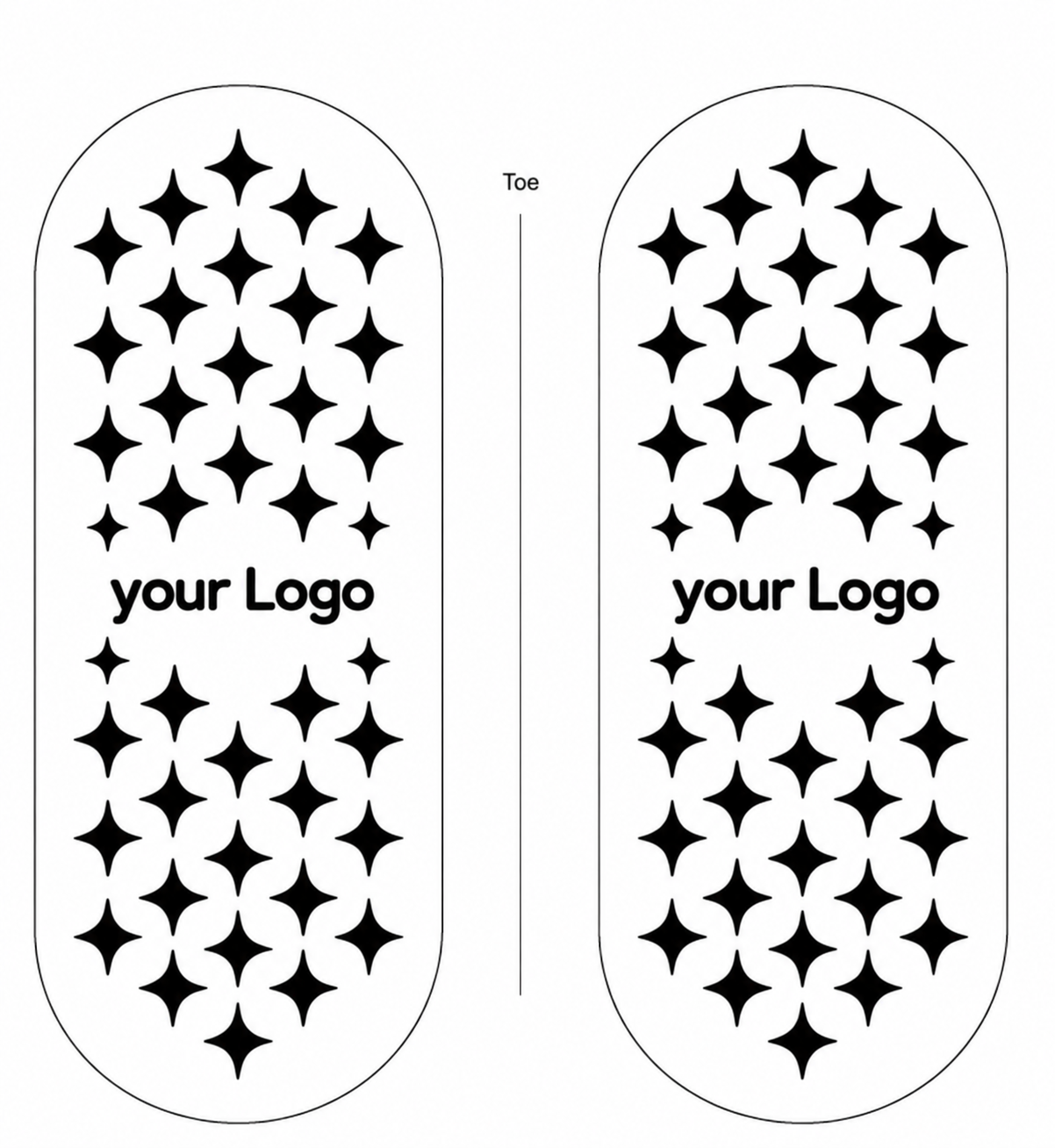
Custom grip plate artwork with repeated star motifs and a horizontal center logo
Stars · larger repeated motifWider negative space makes the icon easy to read. Check star size, edge clearance and the center-logo gap on the sample.
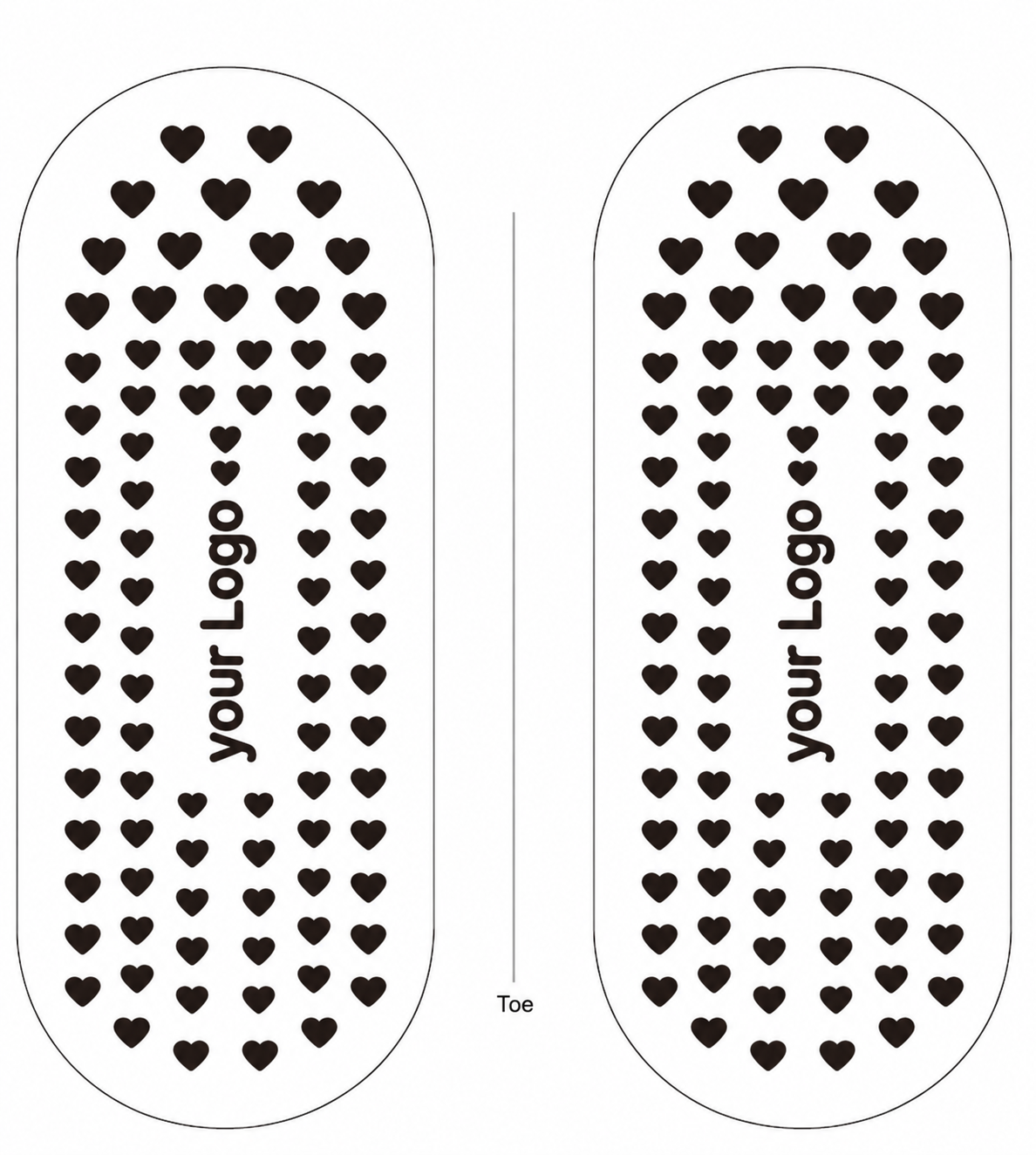
Custom full-sole grip plate artwork with dense heart motifs and a vertical center logo
Hearts · smaller, denser repeatMore individual motifs appear within the same sole area. Confirm print definition and the space around the integrated logo.
Custom full-sole grip plate artwork with mixed-size hexagons and circles and a vertical center logo
Geometric mix · variable motif scaleMixed sizes create a more continuous visual field. Check small-detail reproduction and the toe and heel boundary.
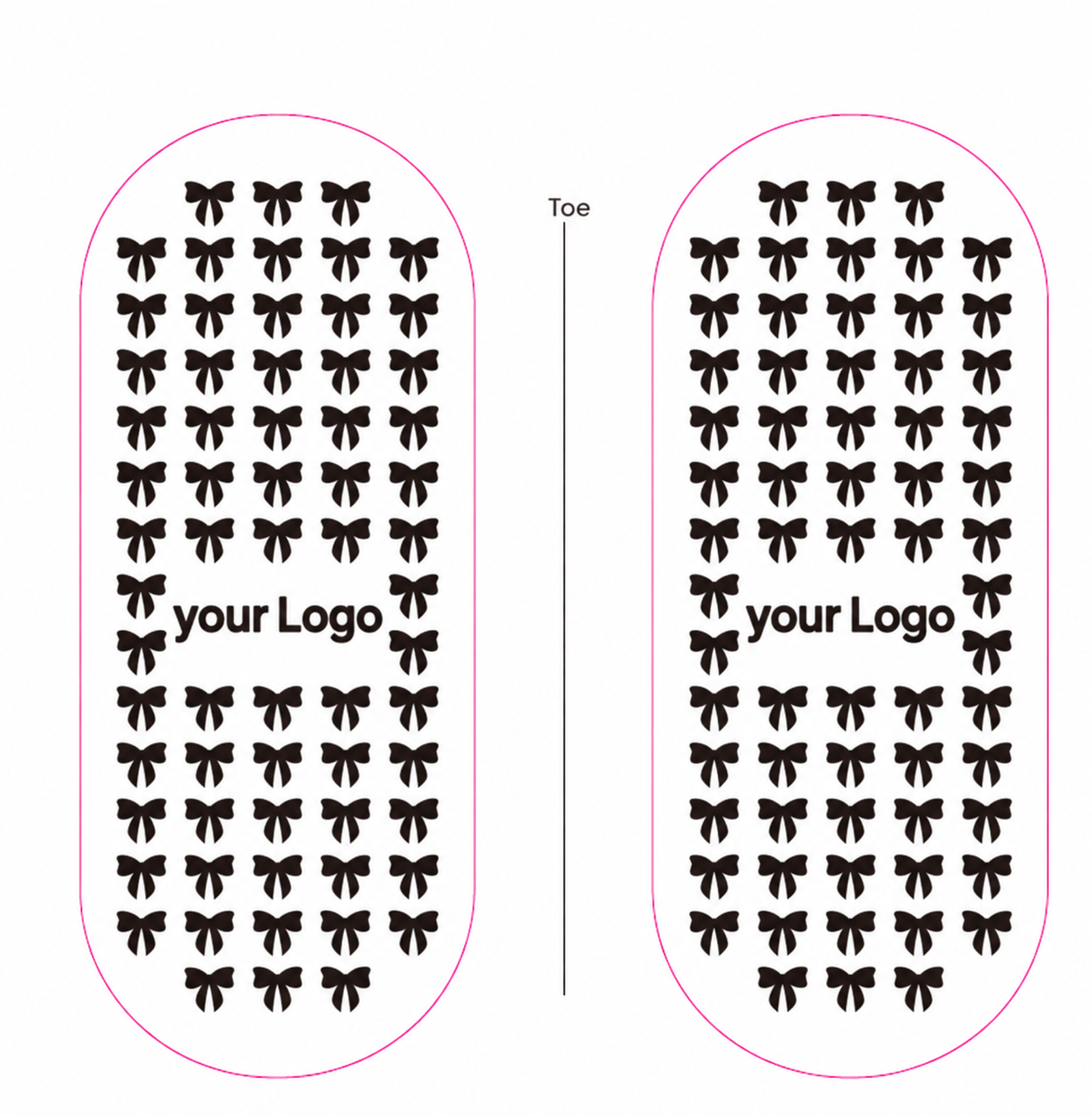
Custom grip plate artwork with repeated bow motifs and a horizontal center logo
Bows · brand-led icon repeatA distinctive silhouette can support a collection story. Check the thin lines, spacing and orientation at production size.

Choose one of our grip patterns or submit your own pattern for production review. The final artwork may be adjusted for print definition, spacing and sole-edge clearance before sampling.

3 · Approval map

Connect every decision to the right evidence.

This record keeps the quotation, artwork, sample and bulk standard aligned.

DecisionBuyer suppliesUPILATE confirmsPhysical sample checkApproval record
Grip materialMaterial preference, color direction and use contextQuoted standard-rubber or premium-silicone option, color route and production feasibilityColor, height, hand feel and visible consistencySpecification plus sample ID
MotifSelected pattern or original artworkMinimum printable detail, spacing and plate layoutShape definition and repeat consistencyApproved production artwork
CoverageRequired heel, arch, forefoot and toe zonesPrintable boundary and any edge limitationCoverage on the worn sockMarked sole map plus photos
Sole logoVector logo and orientationSize, clearance and integration with the grip layoutLegibility and raised-edge feelArtwork version plus sample ID
PerformanceUse case and any required test conditionProposed method, sample quantity and pass ruleObserved result under the agreed conditionDated result, not a drawing
CommercialQuantity by color, size and designMOQ, plate fee, sample cost and scheduleNot a performance decisionApproved quotation

4 · Approval workflow

Freeze the pattern before the plate, and the sample before bulk.

Use clear gates so artwork revisions do not become untracked factory changes.

01 · Brief

Define the use and order.

Share the sock style, target user, grip material and color, branding, quantity by color and size, packaging and destination.

02 · Pattern route

Select or submit artwork.

Choose an existing UPILATE layout or send editable vector artwork for motif, spacing and production review.

03 · Production file

Approve the sole map.

Sign off the final motif, logo, left/right orientation, color separation, coverage boundary and artwork version.

04 · Physical sample

Review the made result.

Check appearance on and off the foot, grip definition, coverage, comfort and any agreed use or test condition.

05 · Bulk approval

Name the reference sample.

Record the dated sample ID, photos, specification, approver and status before the bulk instruction is released.

06 · Reorder control

Reuse the approved record.

An existing approved plate may be reusable for repeat orders, subject to plate condition and reconfirmation of the current specification.
5 · Custom plate and MOQ

Price a new pattern as a controlled production change.

Commercial approval should follow the final artwork version, not a rough reference image.

Custom grip plate

Starts from 100 pairs with a separate plate fee.

The custom grip-plate MOQ is calculated for the approved project. Confirm quantity, number of grip colors, artwork complexity and whether multiple sole sizes or plate versions are required.

  • Final editable logo and motif artwork
  • One-color or two-color grip plan
  • Quantity by sock color and size
  • Plate fee shown separately in the quotation
After approval

Late changes can affect cost and timing.

If the logo, motif, spacing, orientation or coverage boundary changes after approval, the factory should review whether the production file or plate must be remade.

  • Issue a new artwork version
  • Reconfirm plate and sampling cost
  • Reconfirm production schedule
  • Keep the old version out of the bulk file set

6 · Search and community signal

Answer the buyer's real question without making an unsupported claim.

Coverage matters to buyers, but pattern artwork should not be presented as proof of traction.

What the factory should say

Compare matched samples, not drawings.

A denser pattern is visibly different, but “denser” does not automatically mean “more slip-resistant.” Compare physical samples made with the same sock fit, grip-material specification and agreed contact surface.

  • Keep the test condition consistent
  • Record sample IDs and observations
  • Separate foot-in-sock movement from sole-on-surface grip
  • Publish measured evidence only when available

7 · Sample checklist

Send one brief that can become the bulk record.

The buyer supplies the design intent and order context; UPILATE confirms the production details that cannot be inferred from an image.

Custom grip pattern brief

Connect every answer to one artwork version and sample ID.

Do not approve traction, wash durability or adhesion from a digital sole layout.

  1. Sock style and intended use
  2. Target quantity by color and size
  3. Selected pattern or editable artwork
  4. Standard-rubber or premium-silicone selection and grip color
  5. Single-color or two-color layout
  6. Heel-to-toe coverage zones
  7. Logo size and orientation
  8. Left/right sole direction
  9. Printable edge-gap confirmation
  10. Physical-sample ID and photos
  11. Defined performance check, if required
  12. Packaging, destination and approver

Custom grip pattern FAQ

Questions to settle before bulk production.

These answers support the inquiry and sample process; the approved production record remains the order standard.

The regular option is standard rubber, with premium silicone available as an upgrade. Confirm the quoted material, color and production specification for each order.

No conclusion should be made from the artwork alone. Grip pattern, material specification, print height, curing, sock fit, movement and contact surface can all affect the result. Compare identified physical samples under the same agreed conditions.

Yes. The sole logo can be integrated and molded with the grip layout. Approve its size, orientation, clearance, legibility and raised-edge feel on the physical sample.

UPILATE's regular layout is designed as a full-sole integrated grip. Confirm the heel, arch, forefoot and toe-zone boundary on the artwork and the worn sample; the extreme curved edge may require a small production clearance.

A custom grip plate starts from 100 pairs and carries a separate plate fee. The final quotation depends on the approved artwork, color plan and order breakdown.

An existing approved plate may be reusable for the same design, subject to plate condition and reconfirmation of the current specification. Confirm this before quoting a repeat order.
No. Artwork approval covers the visible layout. Any wash, adhesion or abrasion claim needs a defined method, sample quantity, acceptance rule and recorded result.

Ready to review a sole layout?

Send the grip pattern, logo and order plan.

UPILATE will review printable detail, grip material and color, full-sole coverage, custom plate, sampling and the approvals required before bulk production.